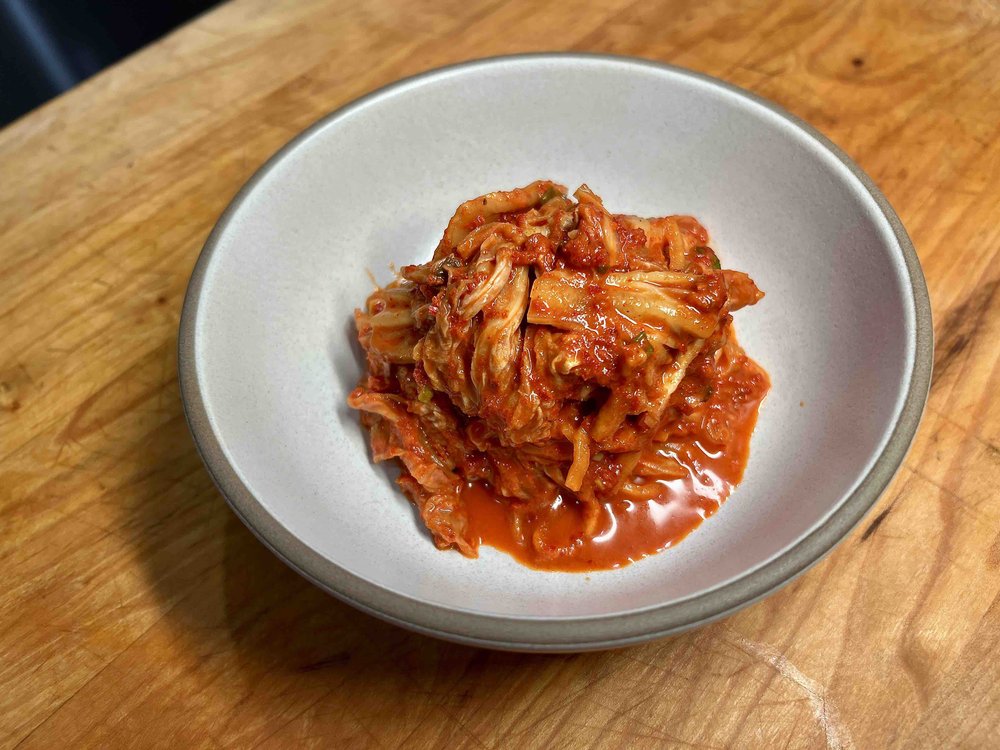
Make this fridge staple - Napa cabbage kimchi! I love making a fresh batch every six months. I eat Napa kimchi with grilled meats, in soft tofu soups, and as a topping with my avocado toast.
Directions for Salted Napa Cabbage

Cut two small slits into the base of the Napa cabbage. Use that as a starting point to tear the Napa cabbage into quarters. Rinse the Napa cabbage thoroughly under cold water to remove any bugs that are trapped in between the leaves.

Salt the Napa cabbage generously with kosher salt. Allow to sit at room temperature for two hours. You will notice a pool of water forming at the bottom of the bowl, this is a good sign! You want to remove moisture. After soaking, the cabbage should be very pliable.

Rinse the cabbage thoroughly under cold water. Set aside to drain while you prepare the remaining ingredients. Dry off with a clean kitchen towel.

Directions for Rice Porridge

Bring the water up to a simmer in a small sauce pot. Once simmering, add in the glutinous rice flour and sugar. Stir to combine and cook for two minutes over medium heat. Remove from heat and set aside to cool.

Directions for Vegetable Slurry

In a food processor, pulse the onions, garlic, and ginger. There is no need to peel the ginger because it is all being pulsed together.

To Assemble the Tongbaechu Kimchi

Combine the rice porridge, vegetable slurry, fish sauce, gochugaru, Korean radishes, and scallions. You should have a thick paste.

Generously rub each leaf of the cabbage with the paste. If you think you’re using too much paste, you probably aren’t using enough. It needs to be soaked in the paste. Place the coated leaves in a sanitized glass jar.

Cover the top of your glass jar with cheese cloth or loosely cover with cheese cloth and tie with a string. Let it sit out at room temperature for 24-48 hours. After the first 24 hours, taste a small piece of kimchi before you continue to let it ferment (if you so choose). The kimchi should have a savory, pleasantly sour taste. You will also notice small bubbles trickling up the sides of your glass jar, this is a good sign! Your kimchi is active. If there’s a ton of liquid that has accumulated to the top, be sure to push the cabbage beneath the liquid with a clean spoon as you let it ferment.

Once the kimchi has achieved the degree of sourness you would like, tightly cover and place into the fridge. The cold temperature will slow down the lactic acid to prevent it from fermenting further. At this point, it is ready to eat. Kimchi will last in your fridge

Cut pieces of kimchi off of the larger leaves as you need them to serve with grilled meats and white rice! This kimchi should last in the fridge for three to six months.