Poilâne Sourdough Bread
Checkout experience
If using active-dry yeast, take ten milliliters of warm water and mix it together. This is called blooming the yeast and is a critical step to getting a beautiful rise. If using instant yeast, skip this step. Set aside for a few minutes.

Take 410 grams of recently fed sourdough starter and combine it with both flours, bloomed yeast, and remaining water in a large five quart bowl. Mix together with dough scraper until a shaggy dough forms. At this point, add in the Kosher salt.

Transfer the mixture to a clean work surface and knead for ten minutes. To knead the dough, pick up the top half of the dough, fold it onto itself, and then push the dough foward with the palms of your hand. If the dough feels really wet and sticky add a pinch of all-purpose flour and continue to knead. It should feel soft and smooth at the end of this process but should not spring back when poked. Transfer to a clean bowl and cover with a clean kitchen towel.

Proof the dough in a warm place for 45 minutes to an hour. It should nearly double in size. If your house is cold, I recommend placing your dough in an oven with the light turned on. Alternatively, place into an oven with a small sauce pot of steaming water to create a make-shift proofing box. Be sure to reheat the water periodically to maximize the humidity inside your oven. After the proofing, the dough should be resistant enough to return to its shape if you poke with your finger.

On a clean, floured work surface, transfer the proofed dough. Gently flatten into a rectangle while maintaining some of its volume. Then, fold into thirds and then fold again in half. Tuck the sides of the ball into itself. Pull the dough ball towards your body, allowing the edges to roll under your pinkies. This pulling technique creates tension which will allow the bread to hold its shape when baking and form a beautiful crust.

Transfer the dough ball to a well-floured banneton proofing basket so that the smooth side is on the bottom. Be sure to pinch shut any loose pieces of dough. Cover with a clean kitchen towel and proof one more time for two hours in a warm place. This is when the majority of the bread’s flavor is developed.

Thirty minutes before the dough has finished proofing a second time, preheat your oven to 500°F with the Dutch oven inside. Once the oven is at temperature, transfer the dough from the banneton to a piece of parchment paper or a silicon baking mat. Use your bread lame to score the dough. I like scoring a beautiful cursive “P” to honor the Poilâne bakery. Working quickly, place the dough into the hot Dutch oven and spray a bit of cold water onto the dough before covering with the lid and returning to the hot oven. The water will create steam which will help the dough rise.

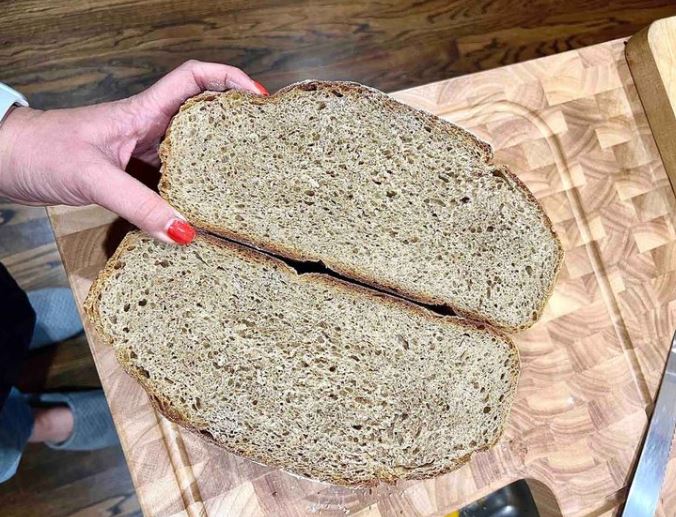
Bake at 500°F for 10-15 minutes before turning down the heat to 450°F and removing the lid for the final phase of baking. Continue to back for another 45-60 minutes or until the top of the miche has developed a beautiful brown crust.

Remove from the oven. Check the bottom crust. As Apollonia says, “you need to listen to the bread”. The flat side should sound like beating a drum, a solid thump. If it’s undercooked, place back onto the rack of the oven and cook in five minute increments. When ready, cool on a wire rack for at least an hour before cutting into the bread. Enjoy with fresh salted butter!
View original recipe